EV Charging at Home with Solar in Delhi NCR
Charge your EV with the sun. Rooftop or balcony solar plus a Type 2 AC wall box — or a Power Port solar carport for societies and offices. Costs, RWA approvals, PM Surya Ghar stacking, and the per-km math, all for 2026.
In May 2026, a Tata Nexon EV in Delhi costs roughly ₹1.45/km on grid charging at the BSES domestic slab. The same car charged off rooftop solar runs at a marginal cost of ₹0/km after a system that pays back in around three years. Across NCR, EV registrations grew faster than any other vehicle category in 2024–25, and the question every new EV owner asks within the first month is the same: can I just charge this on my own roof?
The short answer is yes — across all of Delhi NCR (BSES Rajdhani, BSES Yamuna, TPDDL, DHBVN, PVVNL, NPCL), and whether you live in an independent house, a builder floor, an apartment, or run an RWA-managed society. This page walks you through the three install paths, the per-km math, the charger types, the RWA approval process, and how to stack the PM Surya Ghar Muft Bijli Yojana subsidy on top of it all.
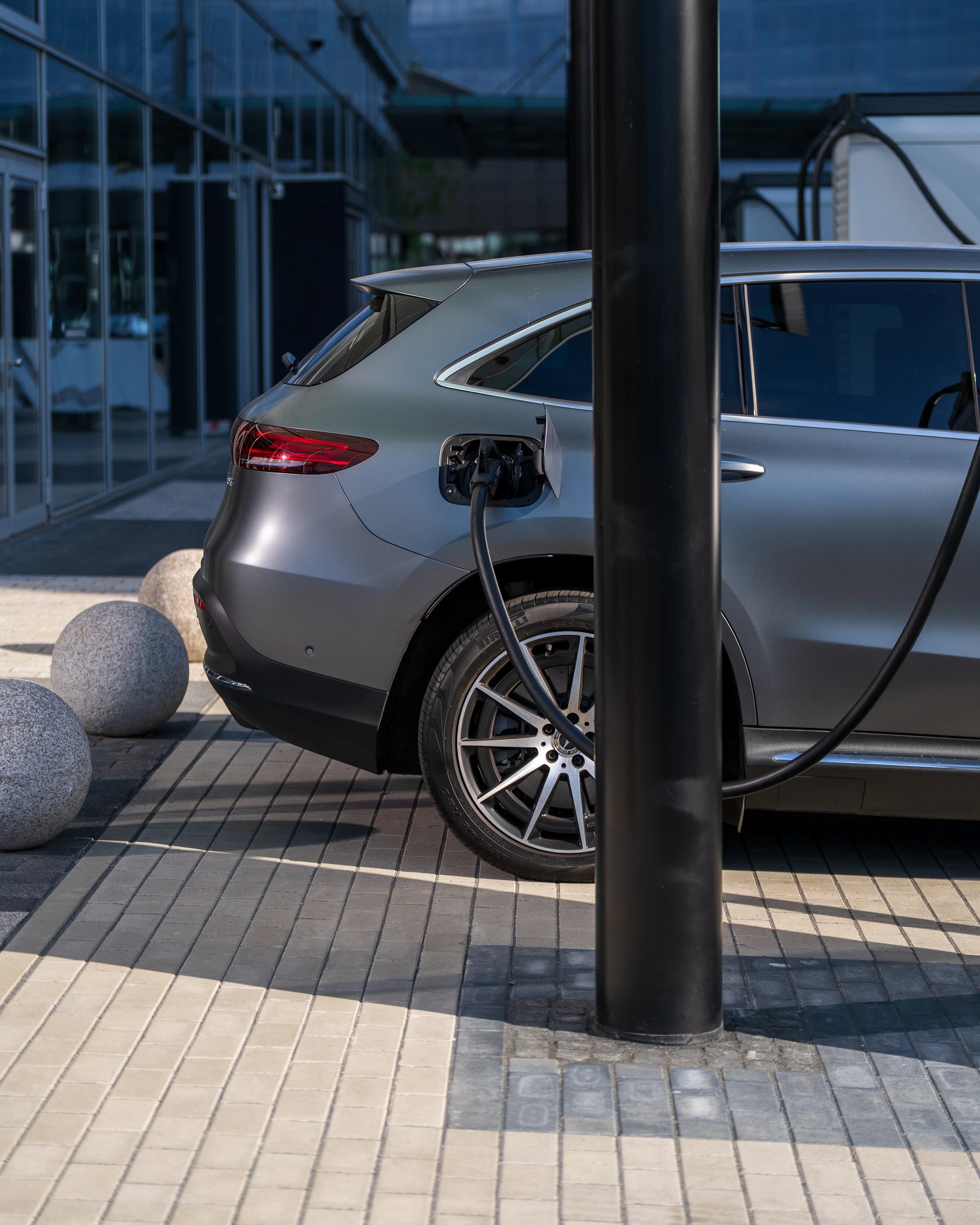
What an EV actually costs to fuel in Delhi NCR (May 2026)
Five running-cost scenarios for the same 1,000 km/month of city driving. The gap between the worst case (petrol) and the best case (home solar) is roughly ₹77,000/year for a single car — and that is before factoring in panel warranty life of 25 years.
| Power source | Cost per km | Monthly fuel | Notes |
|---|---|---|---|
| Petrol car (15 km/L, ₹96/L) | ₹6.40 | ₹6,400 | 1,000 km/month baseline |
| Diesel car (18 km/L, ₹89/L) | ₹4.95 | ₹4,950 | 1,000 km/month baseline |
| EV on grid (BSES domestic, ₹9.0/unit) | ₹1.45 | ₹1,450 | 6.2 km/kWh average |
| EV on grid (BSES EV-special tariff, ₹5.5/unit) | ₹0.89 | ₹890 | Off-peak slab, separate meter |
| EV on home solar (Power Port / rooftop) | ₹0.00 marginal | ₹0 fuel cost | After ~3-year payback on solar |
Tariff and fuel-price assumptions: BSES domestic slab ₹9/unit, BSES EV-special tariff ₹5.5/unit, petrol ₹96/L, diesel ₹89/L (Delhi, May 2026). EV efficiency: 6.2 km/kWh (manufacturer-rated city). Marginal-cost figure for solar reflects a paid-back rooftop system in years 4–25.
Pick the configuration that matches your home
There is no one-size-fits-all setup for solar EV charging. The right install depends on your roof access, the parking layout, and whether the decision is yours alone or sits with an RWA.
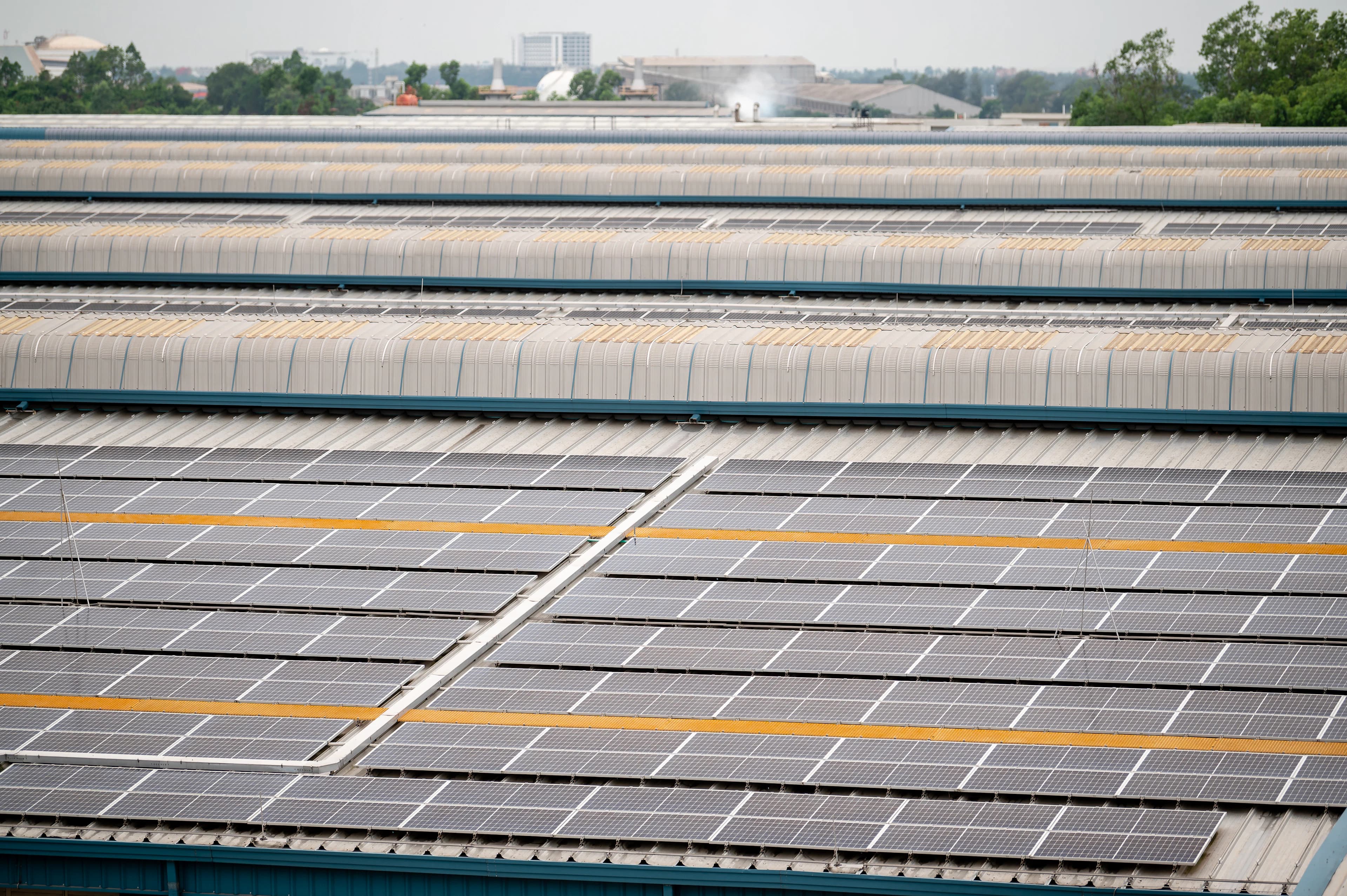
Path A — Rooftop solar + Type 2 AC charger
You own an independent house (or builder floor with a private roof). Install 3–5 kW rooftop solar + a 7.4 kW Type 2 wall-mounted AC charger in your parking spot.
- Best for
- Independent houses, builder floors, plotted developments in Gurgaon, Faridabad, Greater Noida West.
- Typical spend
- ₹1.8–2.8 lakh (before subsidy)
- Payback
- ~3.5 years
Path B — Power Port solar carport (RWA / society)
You manage an RWA, builder, or commercial parking. Install Power Port — a structural solar carport that simultaneously generates clean power and shades cars while charging them.
- Best for
- Apartment societies, office complexes, hotels, schools, hospitals across Delhi NCR.
- Typical spend
- ₹2.5–6 lakh per bay (turnkey)
- Payback
- 4–5 years (with sustained EV usage)
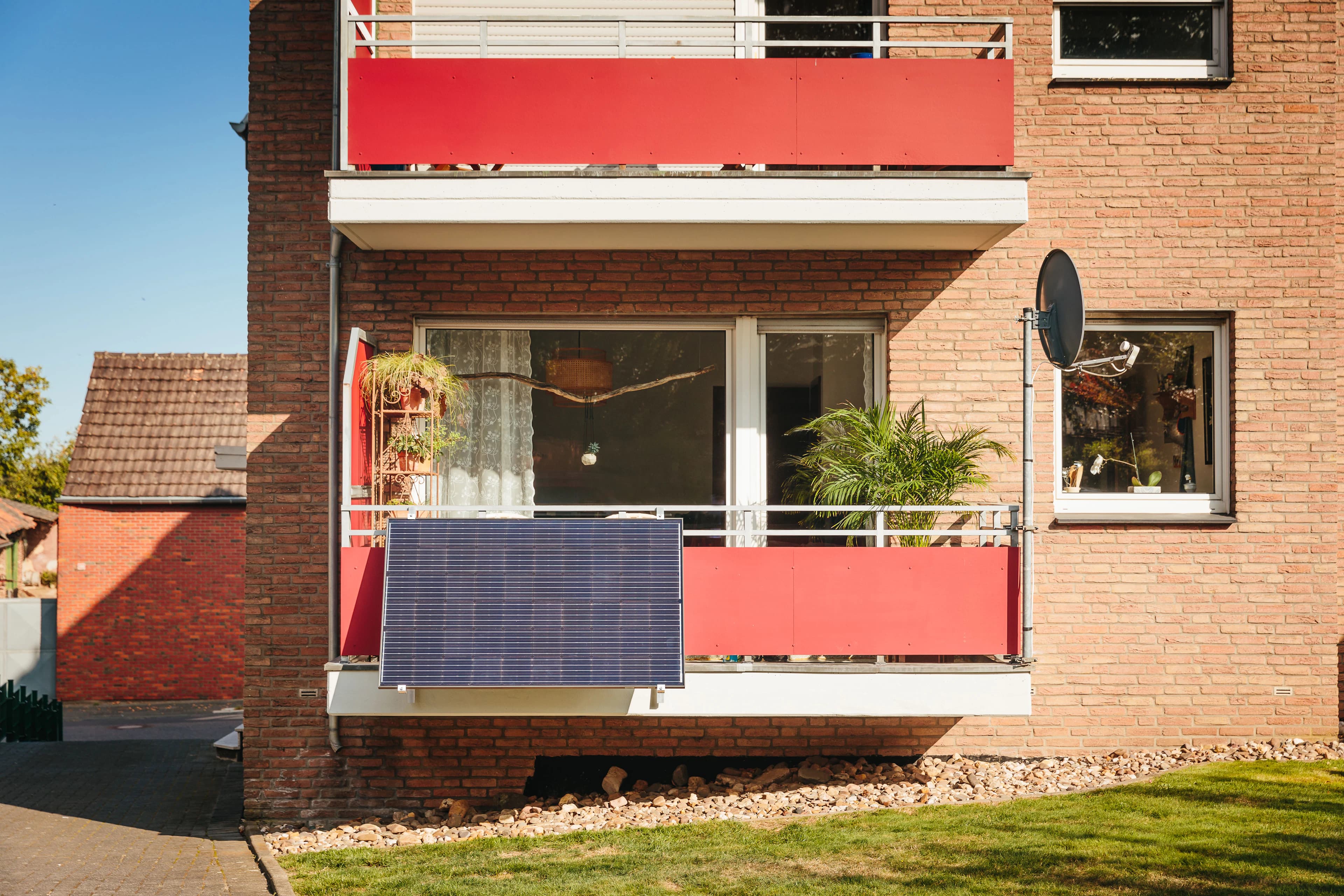
Path C — Balcony solar + portable trickle charger
You live in an apartment with no rooftop access but a sunny balcony. Pair a 1.5–3 kW Power Spot balcony solar system with a 3.3 kW portable EV trickle charger.
- Best for
- Renters and apartment owners in Sector 137 Noida, Dwarka, Ghaziabad highrises, Indirapuram.
- Typical spend
- ₹70,000–1,80,000
- Payback
- 2.5–3 years (offsets full-house bill, EV is bonus)
Which home EV charger is right for you?
Indian homes typically pair solar with a Type 2 AC wall box. DC fast chargers are mostly overkill for residential use and need far higher sanctioned load. Here is the practical sizing chart.
Type 2 AC Wall Box (3.3 kW)
Type 2 AC Wall Box (7.4 kW)
Type 2 AC Wall Box (11 kW, 3-phase)
DC Fast Charger (15–30 kW)
Apartment societies and RWAs: the carport route
Most NCR apartment owners cannot install rooftop solar on the building roof individually — it is common property. The RWA-friendly path is Power Port: a structural solar carport in the parking area that generates clean power, shades cars, and integrates Type 2 AC charging directly into the columns.
- Common-area asset. The system feeds the society’s common-services connection — corridor lights, lifts, water pumps — with surplus available to dedicated EV bays.
- Approval timeline. Typical NCR society approves within 30–60 days from the AGM agenda. We provide a one-page RWA proposal pack covering structural, electrical, and accounting questions.
- Per-bay billing. Each EV bay has its own metered charger — the RWA bills resident EV owners on usage, the common-services account benefits from the surplus.
- Subsidy note. RWA-level installs apply under the Group Housing track on PM Surya Ghar, not the individual residential track. Per-kW subsidy is lower than residential rooftop, but absolute project size more than makes up for it.
Stack PM Surya Ghar with your EV charging install
The central subsidy is for residential rooftop solar generation — not the EV charger. But the rooftop solar you install powers the EV charger, and that’s where the subsidy stack helps. A 3 kW rooftop system in Delhi nets to roughly ₹72,000 after the ₹78,000 central subsidy and ₹30,000 Delhi state top-up.
| 3 kW rooftop solar (turnkey) | ₹1,80,000 |
| Less: PM Surya Ghar central CFA | – ₹78,000 |
| Less: Delhi state subsidy | – ₹30,000 |
| Net rooftop spend | ₹72,000 |
| Type 2 AC wall box (7.4 kW) | ₹38,000–55,000 |
| Installation, cabling, MCB | ₹15,000–20,000 |
| All-in net cost (Delhi resident) | ₹1.25–1.45 lakh |
For residents of Gurgaon (DHBVN), Noida/Ghaziabad (PVVNL) and Greater Noida (NPCL), state top-ups vary or are absent — all-in net cost lands closer to ₹1.55–1.75 lakh. See the PM Surya Ghar Muft Bijli Yojana page for the per-state breakdown.
How a solar EV charging install actually goes
From your first call to subsidy in your bank account, plan for roughly two months. The install itself takes 1–2 days; the rest is DISCOM filing, inspection, and disbursement.
- 1
Free site assessment (Day 0)
Share photos of your roof or parking, your sanctioned electrical load, and the EV model(s) you charge. We size the rooftop solar system and pick the right charger spec in 24–48 hours — no obligation.
- 2
Sanctioned load check & DISCOM filing (Day 1–7)
We verify your DISCOM-sanctioned load can support the charger (or initiate a load enhancement application with BSES, TPDDL, DHBVN, PVVNL or NPCL). EV-special tariff registration is filed where applicable.
- 3
PM Surya Ghar application (Day 5–10)
If you are installing 3 kW+ rooftop solar, we submit your PM Surya Ghar Muft Bijli Yojana subsidy application via the National Portal in parallel — you stack ₹78,000 central plus the Delhi state top-up.
- 4
Solar + charger installation (Day 14–20)
Single visit covers panel mounting, inverter commissioning, dedicated EV-charger MCB, and Type 2 wall-box installation in your parking spot. Typical install: 1–2 days.
- 5
Net meter & inspection (Day 25–40)
DISCOM installs the bi-directional net meter. Empanelled inspector verifies the install. Once cleared, your solar starts exporting credits and your EV charger starts billing on the EV-special tariff if you registered for one.
- 6
Subsidy disbursement (Day 60–90)
Central PM Surya Ghar subsidy hits your bank account 30–45 days after inspection upload. Delhi state top-up follows in another 30–45 days. Net cost of the full system drops by ₹1 lakh+ for Delhi residents.
Frequently asked questions
Can I really run my EV on solar in a Delhi NCR apartment with no roof?+
Yes — with caveats. A 1.5–3 kW Power Spot balcony solar system generates roughly 5–12 kWh/day, which translates to 30–75 km of EV range per day on most Indian EVs (Tata Tiago EV, MG Comet, Tata Punch EV). For full charging speed you still need a dedicated 7.4 kW AC wall box in your parking spot — the balcony solar offsets the grid draw, not replaces the charger. The economics still work because every kWh from solar is one kWh you do not buy from BSES at ₹9/unit.
Does PM Surya Ghar Muft Bijli Yojana cover EV charging infrastructure?+
PM Surya Ghar covers residential rooftop solar generation — not the EV charger itself. But the rooftop solar you install can power your EV charger directly during the day, which is the real economic win. Eligible 3 kW+ systems get ₹78,000 central subsidy plus Delhi’s ₹30,000 state top-up, totalling ₹1.08 lakh against a typical ₹1.8–2 lakh system. For a step-by-step on the subsidy stack, see our PM Surya Ghar Delhi NCR guide.
What is the EV-special tariff in Delhi NCR and how do I get on it?+
Delhi (BSES Rajdhani, BSES Yamuna, TPDDL) and DHBVN (Haryana) offer reduced tariffs for EV charging on a separate metered connection. Rates currently sit at ₹5.0–₹5.5/unit for off-peak EV slabs, against ₹9/unit on the regular domestic slab. You apply through the DISCOM portal with proof of EV ownership (RC book) and a request for a separate EV meter. PVVNL and NPCL (UP side) also have EV slabs but with different rate structures.
Will my apartment society RWA approve a Power Port solar carport?+
Power Port is a structural solar carport that integrates with existing parking layouts. RWA approval is the same process as any common-area infrastructure addition — majority resolution at the AGM, board sign-off, and a designated common services electricity connection. We provide RWAs with a one-page proposal pack that handles 90% of the approval objections. Most NCR societies approve within 30–60 days once the proposal is on the AGM agenda.
How does charging speed change when the panels are not generating (cloudy days, night)?+
Your EV charger runs on a hybrid solar+grid input. During the day with full sun, the panels supply most or all of the charger’s draw. Under clouds or at night, the system seamlessly pulls from the grid. The user experience is identical — you plug in, the car charges. The economics shift toward grid for cloudy days, but a typical Delhi NCR install sees 280+ sunny days a year, so the math heavily favours daytime charging.
What’s the difference between Power Port and a regular ground-mount solar carport?+
Power Port is engineered specifically for Indian climate loading (wind, monsoon, summer thermal cycling) and integrates Type 2 AC charging directly into the carport columns — no separate wall-box needed. Standard solar carports treat the EV charger as a third-party add-on. Power Port also uses BIPV-grade panels rated for visual appeal in commercial parking environments.
What about safety — is home EV charging on solar safe?+
Yes, when installed correctly. The charger has its own MCB and earth leakage detection independent of the solar inverter. The solar inverter has anti-islanding protection so it shuts down during DISCOM outages. All LivSmart installations include a Type-A or Type-B RCD on the EV charger circuit, dedicated grounding, and a switchable isolator for service. We follow IEC 61851 and IS 17017 standards.
Do you install in only Delhi or all of NCR?+
All of Delhi NCR — Delhi (BSES, TPDDL areas), Gurgaon and Faridabad (DHBVN), Noida and Ghaziabad (PVVNL), Greater Noida (NPCL). Single visit install for residential rooftops; carport installations (Power Port) typically schedule over 3–5 days depending on size.
How long does the solar EV charging system actually last?+
Solar panels carry 25-year linear performance warranties (Tier-1 monocrystalline). The inverter typically needs replacement at year 10–12 (₹25,000 swap). The EV charger itself carries a 3–5 year manufacturer warranty depending on brand. Mounting structures and Power Port carports last 30+ years. End-to-end realisable life of the install is 25–30 years.
Can I add this later — first solar, then the EV charger?+
Absolutely. Most LivSmart customers install solar first (or already have it) and add the charger when they buy their first EV. The only thing to plan upfront is leaving a dedicated 16A or 32A circuit headroom in the distribution board so the charger plugs in cleanly. We can pre-wire this when sizing the original solar install.
Ready to charge your EV with sunlight?
Free 15-minute Delhi NCR assessment. Share your last 3 electricity bills and the EV(s) you charge — we come back the same day with system sizing, charger spec, and a written quote that includes the PM Surya Ghar subsidy stack. No registration fees, no agent middlemen.